Breakages during a move rarely come from the journey. They come from a badly filled box that collapsed, or from a plate laid flat instead of on its edge. Good packing is an hour saved at loading and not a single plate lost on arrival.
The materials, for an average home
- Boxes: two sizes are enough. Small ones (around 35 litres) for anything heavy, large ones (around 70 litres) for anything bulky and light.
- Wardrobe boxes: they save you ironing an entire wardrobe. They are often hired by the day.
- Tape: count one roll per 15 to 20 boxes, and buy wide (48 mm).
- Bubble wrap and packing paper. Free and greener: your towels, sheets and clothes do the job just as well.
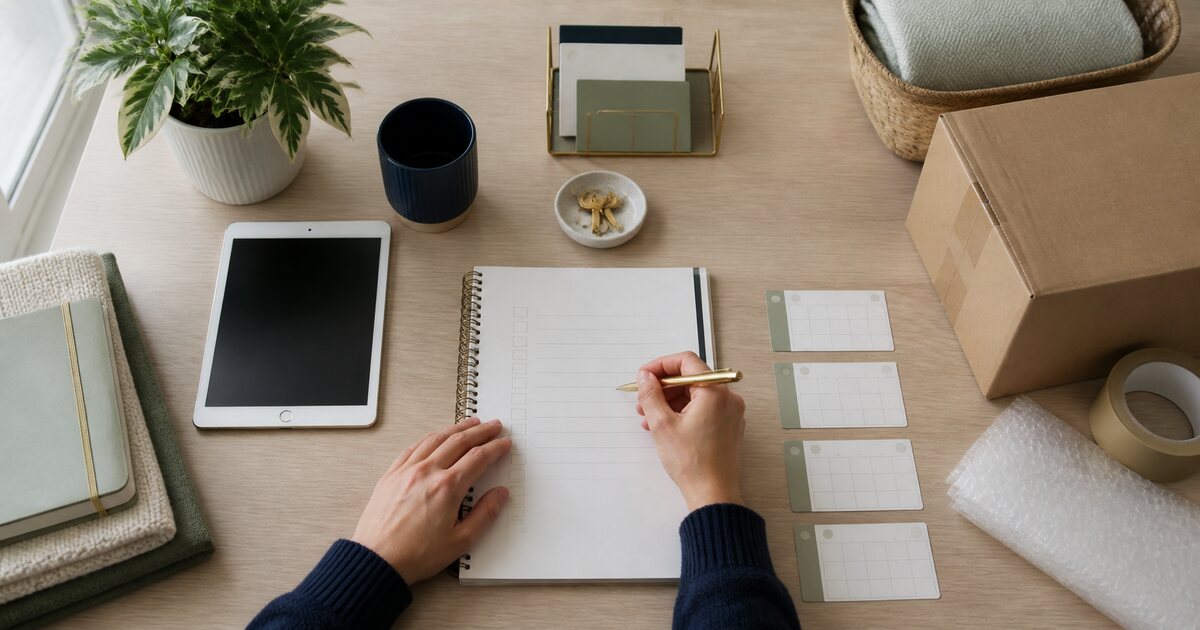
- A thick marker and, ideally, coloured labels, one colour per room.
The five rules that prevent breakages
- Reinforce the bottom. Three strips of tape in an H, always, even on a new box.
- Heavy at the bottom, light on top, in the box as in the lorry.
- Stay under 20 kg per box. If you cannot lift it comfortably on your own, nobody else will either.
- Fill the gaps with crumpled paper or textiles. What moves, breaks.
- Close it flat. A bulging box will not stack, and a box that will not stack wastes space in the lorry.
Room by room
The kitchen
This is the longest room to pack: set a full day aside for it.
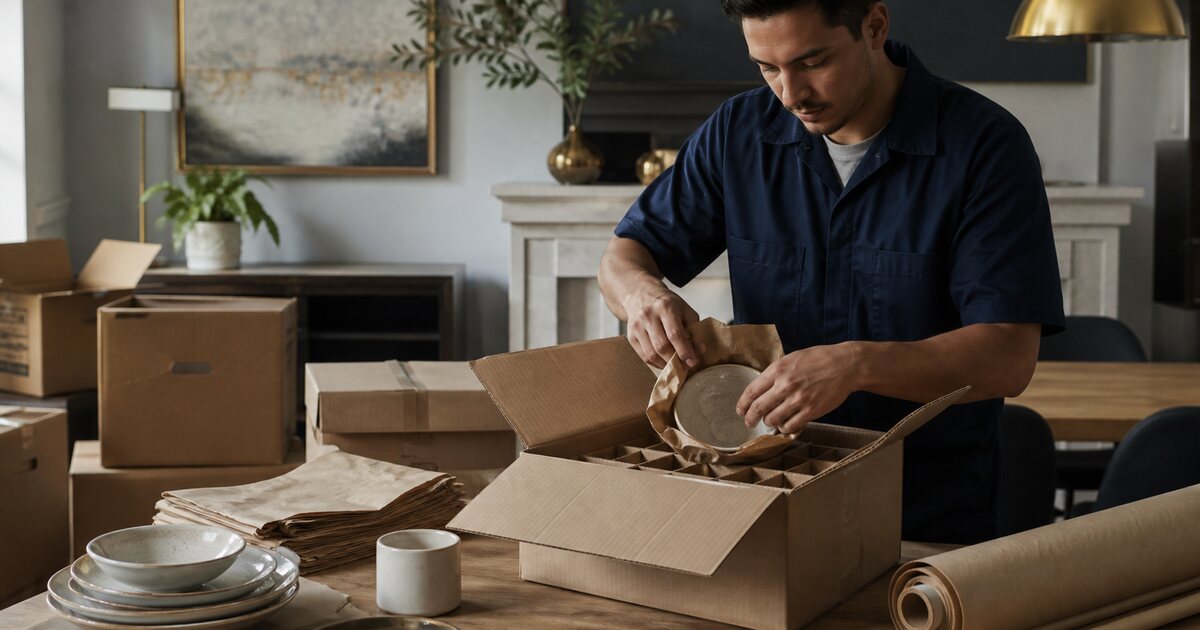
Plates are packed upright, on their edge, like records: laid flat they break under their own weight. Each glass is wrapped individually, then wedged into a small box. Knives are wrapped blade-protected, in taped cardboard, and the box is marked.
Empty, rinse and dry half-used containers: oil leaking into a box ruins everything around it. The contents of the freezer are eaten in the days before; they do not travel.
The bedroom and clothes
Folded clothes travel very well in large boxes or vacuum bags. Hanging clothes go into a wardrobe box or, failing that, stay on their hangers inside a bin bag pierced at the bottom to let the hooks through.
Bedding doubles as padding: duvets and pillows protect fragile furniture in transit.
The living room and electronics
Photograph the back of your television and your set-up before unplugging anything: you will thank yourself when reconnecting. Put each set of cables in a labelled bag.
A flat screen travels upright, never lying down: the panel cannot take pressure across its surface. If you kept the original box, now is the time to use it.
Pictures and mirrors are protected at the corners and carried upright, on their edge, wedged between two pieces of furniture.
Papers and valuables
Identity documents, deeds, contracts, jewellery, keys, hard drives and medication do not go in the lorry: they travel with you, in a bag you keep within reach.
Labelling properly
Write on the side of the box, not on the top: once boxes are stacked, only the sides can be read. Note:
- the destination room in the new home, not the room it came from;
- the contents in two or three words;
- FRAGILE and THIS WAY UP where it applies.
One colour per room, stuck on the matching door on arrival too, lets a crew who does not know your home put every box in the right place without asking a single question.
The essentials box
Prepare a clearly marked box (or suitcase) loaded last and unloaded first: toilet paper, soap, hand towels, chargers, a pan, some cutlery, coffee, what you need to make the beds, and a first-aid kit. It saves you opening twenty boxes on the first evening.
No time or no wish to pack? Packing is a separately priced option in our quote: we come the day before, we pack, and we load the next day.